


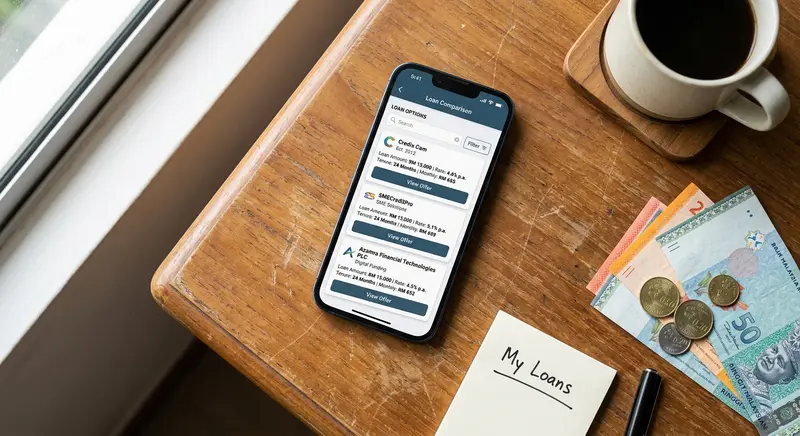
The financial landscape in Cameroon is undergoing a significant transformation, with digital lending services and loan applications becoming increasingly prominent. Driven by widespread smartphone adoption and the growing use of mobile money, these platforms offer quick and accessible credit, meeting a substantial demand for short-term funds across the nation.
As a financial expert, my aim is to provide you with a comprehensive overview of this evolving sector. We will explore the market, detail some key players, discuss interest rates and terms, examine the regulatory framework, and offer practical advice to ensure you navigate this new terrain safely and effectively.
Understanding Cameroon's Digital Lending Landscape
Cameroon's digital economy has seen remarkable growth. By mid-2025, smartphone penetration reached an impressive 45%, while registered mobile money accounts surpassed eight million, representing 32% of the adult population. This robust technological foundation has paved the way for digital lenders to thrive, facilitating an estimated two billion transactions worth approximately one trillion XAF in the second quarter of 2025 alone. This rapid expansion highlights the critical role digital finance now plays in daily economic life for many Cameroonians.
The demand for immediate, flexible credit solutions has surged, particularly among individuals and small businesses seeking to cover urgent expenses or seize fleeting opportunities. Loan apps have stepped in to bridge this gap, offering everything from nano-loans as low as 5,000 XAF to larger term loans up to 1,000,000 XAF, making credit more accessible than ever before.
Key Loan Apps, Their Offerings, and Terms
The Cameroonian market currently hosts over twenty active loan applications, each with unique offerings, interest rates, and terms. It is essential to understand these variations before committing to any service. Here is a closer look at some of the prominent platforms:
Prominent Digital Lending Platforms
- Le Prêt (Smooth Finance): This application offers loans ranging from 10,000 to 300,000 XAF with an Annual Percentage Rate (APR) between 15% and 30% per annum (unverified). They typically charge an origination fee of 2% to 5% per loan and a daily late fee of 1% (unverified). Onboarding requires a National ID, a selfie, and phonebook access, using a combination of credit bureau and psychometric scoring for underwriting (unverified). Users often report a simple interface but occasional downtime.
- Crédit Instantané (SikaDua): Offering loans from 5,000 to 100,000 XAF, Crédit Instantané has an APR of 18% to 36% per annum. They apply a flat monthly rate of 3% to 5%. Their onboarding process is quick, using SMS-OTP and National ID, with an automated score based on mobile money history. While known for fast disbursement, some users have reported poor customer support.
- Pivoine argent-crédit de prêt (Boom Loan Ser): This app provides a broader credit range from 50,000 to 500,000 XAF, with an APR of 12% to 36% per annum. Origination fees are typically 4% to 6%, with no collateral required. They employ an AI-driven risk engine for underwriting, requiring an ID, income proof, and a selfie. Despite being registered in Nigeria (unverified), it is licensed by COBAC. Users appreciate clear fee disclosures, though occasional delays occur.
- Bout du doigt-prêt dargent (Lighting Finance Tech): Unique for its USSD-only service, this platform does not require an app download, making it accessible even without internet. It offers loans from 20,000 to 200,000 XAF, with a 5% service fee and a daily interest of 0.1%. While inclusive, it lacks transparency regarding APR and faces a risk of suspension as it operates under provisional approval.
- Credit rapide-loan app (CREDIT RAPIDE DEV): With loans from 10,000 to 150,000 XAF and an APR of 20% to 35% per annum (unverified), this app charges a 3% origination fee and a 2% daily late fee. It uses phone data analytics for underwriting and is known for fast approval but aggressive collection practices.
Other notable services include YaMoney, InsCash, Argent Youm, MoMoKash & Corpocash (Credix Cam via USSD), and JourneyFin, each presenting different loan amounts, interest rates, and terms. Loan amounts can vary significantly, starting from as little as 1,000 XAF for USSD services up to 1,000,000 XAF for some established platforms. Interest rates, often expressed as APR, typically range from 12% to 36% per annum, with some apps also charging origination fees, service fees, or daily interest rates. It is crucial for consumers to meticulously compare these figures as seemingly small fees can significantly increase the total cost of credit.
Navigating Regulations and Consumer Protection
The rapid expansion of digital lending has not been without its challenges, particularly concerning consumer protection and the risk of fraud. In response, the Cameroonian Ministry of Finance, aligning with the CEMAC Payment Services Regulation No. 04/18/CEMAC/UMAC/COBAC, issued a directive on May 5, 2025.
This directive mandated all fintech operators, including digital lenders, to secure formal licenses by August 31, 2025, or face suspension. This move is a significant step towards formalizing the sector, strengthening consumer safeguards, and curbing illicit activities. Enforcement began in September 2025, leading to the temporary delisting of several unlicensed applications from app stores.
The regulatory framework also incorporates rules from COBAC R-2019/01 on Anti-Money Laundering and Combating the Financing of Terrorism (AML/CFT). These rules require robust Know Your Customer (KYC) procedures, comprehensive transaction monitoring, and adequate capital for operators. The objective is to foster a more transparent, secure, and harmonized digital finance ecosystem across the CEMAC region.
Consumers should be aware that some applications, while operational, may be registered in other countries (e.g., Nigeria) or operate under provisional approvals. Such situations can introduce additional risks, including potential regulatory uncertainty or challenges in seeking recourse in case of disputes. Always prioritize licensed and clearly regulated providers.
Practical Advice for Responsible Borrowing
While loan apps offer immense convenience, they also come with inherent risks, including high Annual Percentage Rates (APRs), potential hidden fees, aggressive collection tactics, and concerns regarding data privacy. To mitigate these risks and ensure a safe borrowing experience, consider the following practical advice:
- Verify Licensing Status: Before applying for any loan, always check the application's licensing status on the official website of the Ministry of Finance. This ensures you are dealing with a legitimate and regulated provider.
- Compare Total Cost of Credit: Do not just look at the advertised interest rate. Compare the total cost of credit, which includes the APR, origination fees, service fees, and any potential late payment charges, across multiple providers. A seemingly low interest rate might be offset by high upfront fees.
- Seek Clear Disclosures and Support: Choose apps that provide clear, unambiguous disclosures of all fees, terms, and conditions. Reliable customer support channels are also crucial for addressing any issues or queries that may arise.
- Borrow Responsibly: Only borrow amounts that you are confident you can repay within the stipulated timeframe. Over-borrowing can lead to a spiral of debt, especially with high-interest short-term loans. Carefully assess your repayment capacity.
- Maintain Digital Hygiene: Be cautious about the data you share. Provide only the necessary KYC information. Always download and update applications from official app stores (like Google Play Store) to avoid malicious software. Regularly monitor your loan accounts and transactions for any discrepancies.
Cameroon's digital lending sector presents a powerful tool for financial inclusion and convenience. By staying informed about the market, understanding the regulatory landscape, and practicing responsible borrowing habits, you can harness the benefits of these services while safeguarding your financial well-being.